
Understanding Baby Teeth | Eruption Schedule
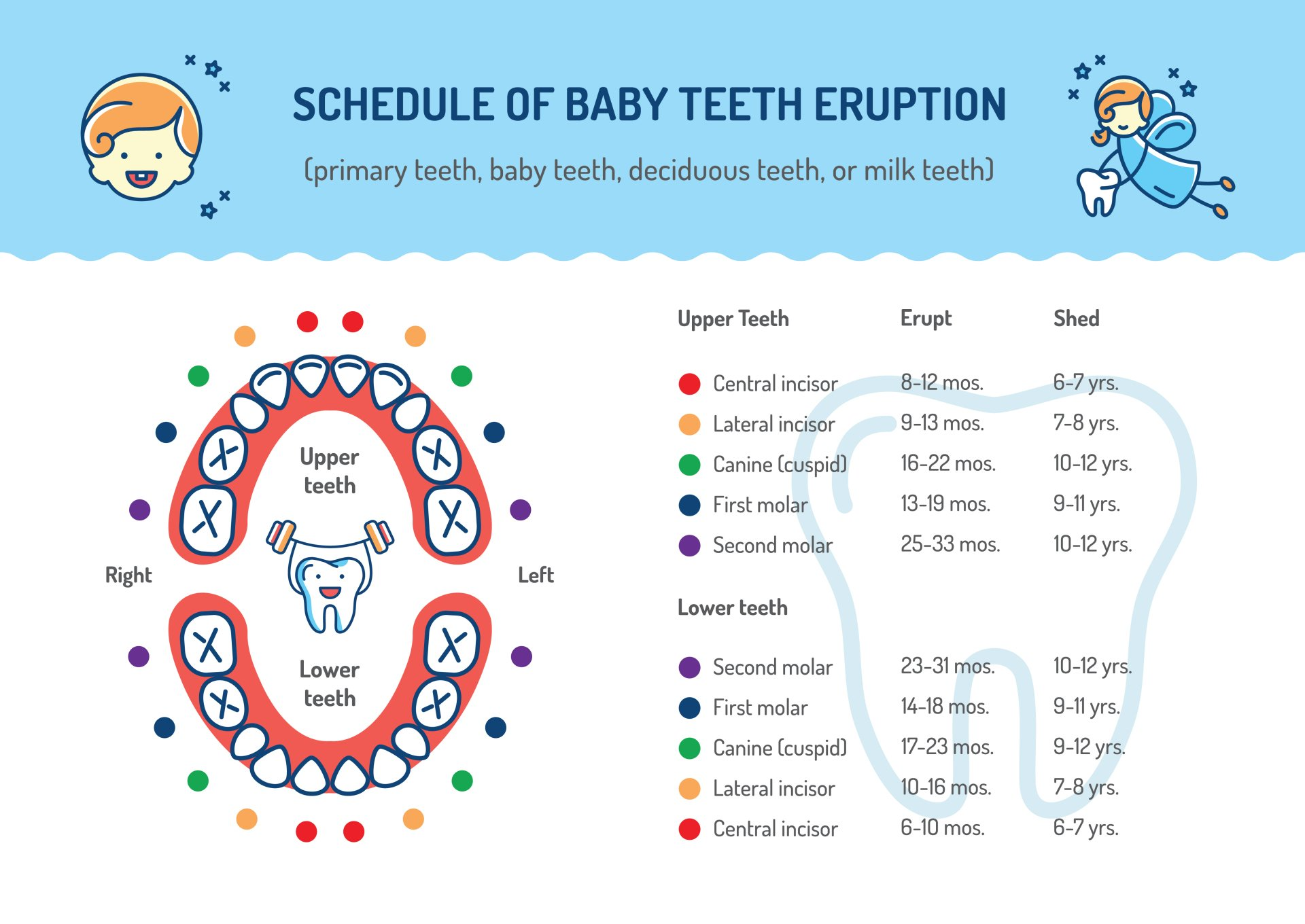
Pediatric dentistry is the fancy term we use to describe “taking care of children’s teeth”. So, what do you need to know about taking care of your child's teeth? Let's start at the beginning. Baby teeth begin erupting between 6-12-months, and continue until your child is 2.5-3-years old. Throughout this period, their gums may feel tender and sore as a result of the physical pressure that new teeth create while erupting. You can soothe their gums by rubbing them with a clean finger or with a cool or wet cloth. Teething rings may also help with gum soreness. As your child gets older, their baby teeth will begin falling out, typically starting at age 6.
Teething Child
All twenty primary (or baby) teeth should be in by the time your child is 2-3-years old. Having a teething child can be stressful, especially if your child is in pain from their teeth coming in. It does not have to be a painful experience though. According to the Dental Association, some methods to make the teething process easier, include rubbing your child’s gums with a clean finger, damp cloth, or with the back of a small, cool spoon. If these methods do not work, our pediatric dental specialist, or your child’s family doctor can recommend a mild over-the-counter medication to relieve the pain.
Small children and babies are likely to chew anything they can get their hands on; walls, seatbelts, table edges, etc. Try to ensure your child stays away from materials that are hard enough to break their teeth or make their gums bleed. It is also important to avoid certain methods while handling a teething child; do not use a liquid painkiller that can be rubbed on your toddler’s gums – your child could ingest some of it; avoid teething biscuits, since many teething biscuits have added sugar or contain hidden sugars; do not dismiss a fever! Fevers are not part of the teething process and if your child has a fever, it is likely not related to their new teeth – you should take your child to their doctor.
First Dental Visit
The common question all new parents have “At what age should my little one be seen by the dentist?”
It is recommended by the Dental Association to assess your child within 6-months of the eruption of their first tooth, or by age 1. However, at our office, we recommend parents bring their children in by 2-years of age for their first dental visit. Even if your child cannot sit still in the chair, we like to familiarize children early on with the office environment and get them as comfortable as possible. Children who see a dentist from an early age are less likely to fear the dentist later in life. Preventative screenings may be all that is required at such an early age; however, at this time, our team is able to help counsel parents on feeding methods and thumb and finger habits that will help build healthy hygiene habits. To get your child ready for their first visit, we suggest allowing your child to attend a hygiene visit with a parent or sibling to become familiar with the office and team. It is also helpful to encourage regular tooth care at home.
Toothpaste and Toothbrush
For young toddlers, brushing with a toothbrush and water is usually sufficient. Non-fluoridated toothpaste can be used but you should always encourage your child to spit it out to help build proper oral habits. Start brushing with a rice grain-sized amount of toothpaste and be sure to watch for any discolouration of their teeth. Until your child can completely spit all the toothpaste, fluoridated toothpaste should not be used. An overconsumption of fluoride toothpaste may cause dental fluorosis of their adult teeth. Dental fluorosis is when the enamel does not properly form and appears with bright white and brown pitted stains. Dental enamel affected by dental fluorosis does not form as strong as it normally should and is therefore prone to cavities.
For infants, a damp or wet cloth is more than enough to clear their gums until their first tooth beings erupting. Once that happens, switch to a finger-brush. A finger-brush is a light fitted rubber holster for your finger which has a gentle scrub to keep your child’s teeth clean. Since an infants diet primarily consists of milk and mashed vegetables, aggressive brushing should be avoided. Once your child begins developing more teeth, switch to a handheld soft-bristle toothbrush. Have your child try brushing your teeth to practice how teeth should be cleaned and try to brush at the same time as your child as they pick up on what you are doing and mimic your movements. Some parents have had success with a counting game when brushing, while others sing songs or play music to encourage a good amount of time to brush.
How Often Should My Child See The Dentist?
Your child should be visiting our dental office every 4-to-6-months depending on their oral health and the treatment plan they are on. However, if your child is experiencing a toothache or bleeding gums, you should call our office to schedule an appointment as these concerns do not go away on their own.
It is important to know that in terms of routine dental appointments, there is not a single schedule that fits all patients. Depending on your child's individual circumstances, our pediatric dentist may want to see them twice a year, every three months, or more often. Whatever it is, do not let those appointments go. Keeping up with the recommended schedule of preventive treatment and practicing effective oral hygiene at home, are the two best ways to prevent oral health diseases and to keep your child's smile looking bright and healthy.
Children’s Dental Care
As parents, we are so concerned with the overall health of our children that we tend to overlook what we deem to be the little things. The health of our teeth is extremely important, especially for children. Children are not immune to dental and oral health issues simply because they are young. Children can have dental and oral health issues if they are not educated enough on proper oral care, or if no preventative measures are taken during their youth. It is never too early to start teaching the importance of oral health to your child. If you instill proper oral care in your child early, they are much more likely to have healthy teeth and gums throughout their life, will require fewer dental procedures, and have better overall physical health. Here are some great ways to keep your child’s oral health in great shape:
List of Services
-
For Your Baby
Baby bottles and sippy cups are the worst enemies in pediatric dentistry. They simply increase both the frequency and duration of contact time between teeth and sugar-containing liquids. Examples of these liquids include breast milk, formula, juice, and any other sweetened drinks. For this reason, it is extremely important to clean your baby's gums and teeth with a toothbrush or a wet gauze after feeding.
-
Instill Good HabitsList Item 1
Make sure to get your child in the habit of brushing their teeth after breakfast and before they go to bed. They may not want to now, but over time they will develop a habit of doing so. Developing the habit early will make it easier for them to keep it later in life.
-
Brush Delicately
An issue that many children have is that they brush too hard. Gums are a living tissue and are not invincible. Many adults deal with receding gum issues later in life because of aggressive brushing. This is especially important for children because their gums are still developing. Teach them to brush lightly and to use a soft-bristle toothbrush.
-
Cut Down On Sugar
Kids are going to want sweets. Who doesn’t? The difference between adults and children is that we (usually) have self-control. This means that we know when to say no to candy, but kids will eat until they are sick. Limit candy, soda, and other surgery drinks to small amounts so that your child does not develop cavities or other health issues.
-
Tips To Help With Your Child’s Dental Fear
- Speak with your child about going for a visit to the dentist.
- Watch what you say. Do not use negative words like “hurt” or “pain” when referring to the dentist or your teeth.
- Bring your child with you to your dental appointments and have them sit with you in the dental chair.
- Give your child a soft-bristle toothbrush to practice brushing.
- Maintain your child’s dental visits regularly. The Academy of Pediatric Dentistry recommends that children visit the dentist by their first birthday, and then every six months after that for regular cleanings and checkups.